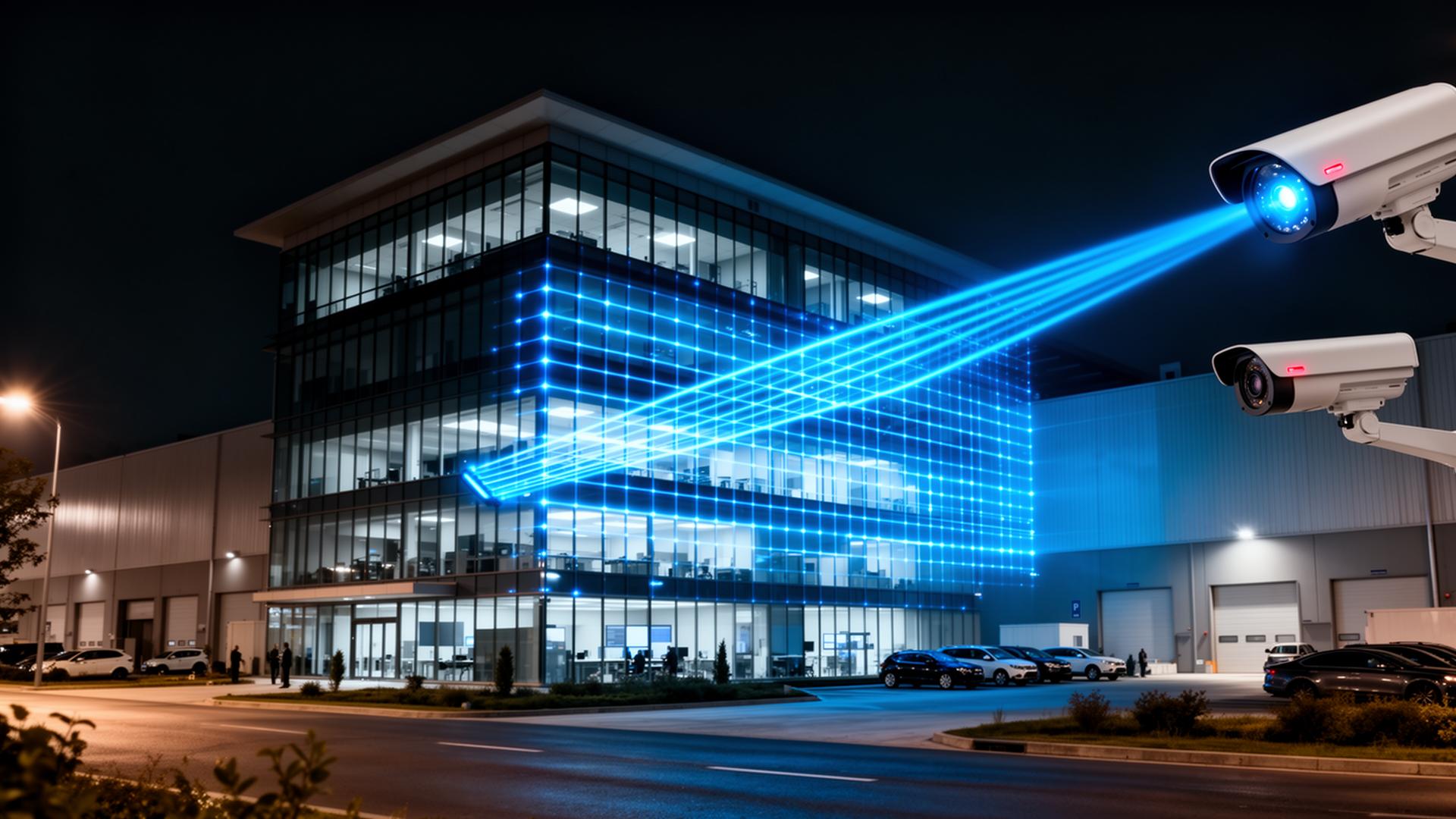
Protecting Businesses from Cyber & Physical Threats
The modern threat landscape requires unified physical and cyber security. See how converged platforms are transforming business protection.
Editorial note: WatchWard is a concept site. This article is general commentary on security technology and does not describe a shipping WatchWard product, customer results, or proprietary research.
In the traditional security model, physical security (cameras, guards, access control) and cybersecurity (firewalls, endpoint protection, SIEM) were entirely separate disciplines with separate teams, budgets, and vendors. In 2026, that separation is no longer viable.
The Converged Threat Reality
Modern attackers think holistically. A physical breach — an attacker gaining access to a server room — enables a cyber attack. A cyber attack — compromising an access control system — enables a physical breach. Nation-state actors, organized crime groups, and even unsophisticated attackers increasingly combine physical and digital tactics.
Security researchers have noted a marked rise in incidents involving coordinated physical and cyber attack vectors in recent years. Many of these attacks succeeded precisely because their targets treated physical and cyber security as separate problems.
The Insider Threat Dimension
Converged security is particularly important for addressing insider threats — employees, contractors, or partners who use their legitimate access to cause harm. An insider threat might badge into a sensitive area (physical security event), connect an unauthorized device to the network (cyber security event), and exfiltrate data (another cyber event) — all in the same incident.
Traditional siloed systems would see three separate, low-priority events. A converged AI platform correlates all three in real time and identifies the pattern as a high-confidence insider threat. The difference is catching the breach before data leaves the building versus discovering it during a compliance audit three months later.
Small Business Security Economics
The prevailing assumption has long been that enterprise-grade security requires enterprise budgets. This is no longer true. AI has fundamentally changed the economics of security monitoring by replacing expensive human analyst hours with machine intelligence that operates continuously at minimal marginal cost.
For small businesses, this means access to security capabilities that would have been a seven-figure annual investment five years ago can now be deployed for a fraction of that cost. The barrier is no longer price — it's awareness that these solutions exist.
Building a Converged Security Strategy
Businesses building converged security programs should start by mapping their complete attack surface — every door, camera, network device, employee endpoint, and cloud service. Unified visibility across this entire surface is the foundation of effective security.
Next, establish behavioral baselines. What does normal look like? Normal business hours, normal network traffic, normal access patterns. AI systems need a baseline to detect deviations. Most modern platforms establish baselines automatically over the first few weeks of deployment.
Finally, define response playbooks. For each significant threat scenario, document exactly what should happen: who gets notified, what systems get locked or isolated, and what evidence gets preserved. Automate as much of this as possible — human response latency is measured in minutes; AI response latency is measured in milliseconds.